Service
Paint Correction in Tucson
Correction is the only service that permanently removes defects from paint, and it does so by removing clear coat. That makes it powerful, finite, and worth understanding before booking.
Mobile service • We come to you • Tucson & surrounding areas
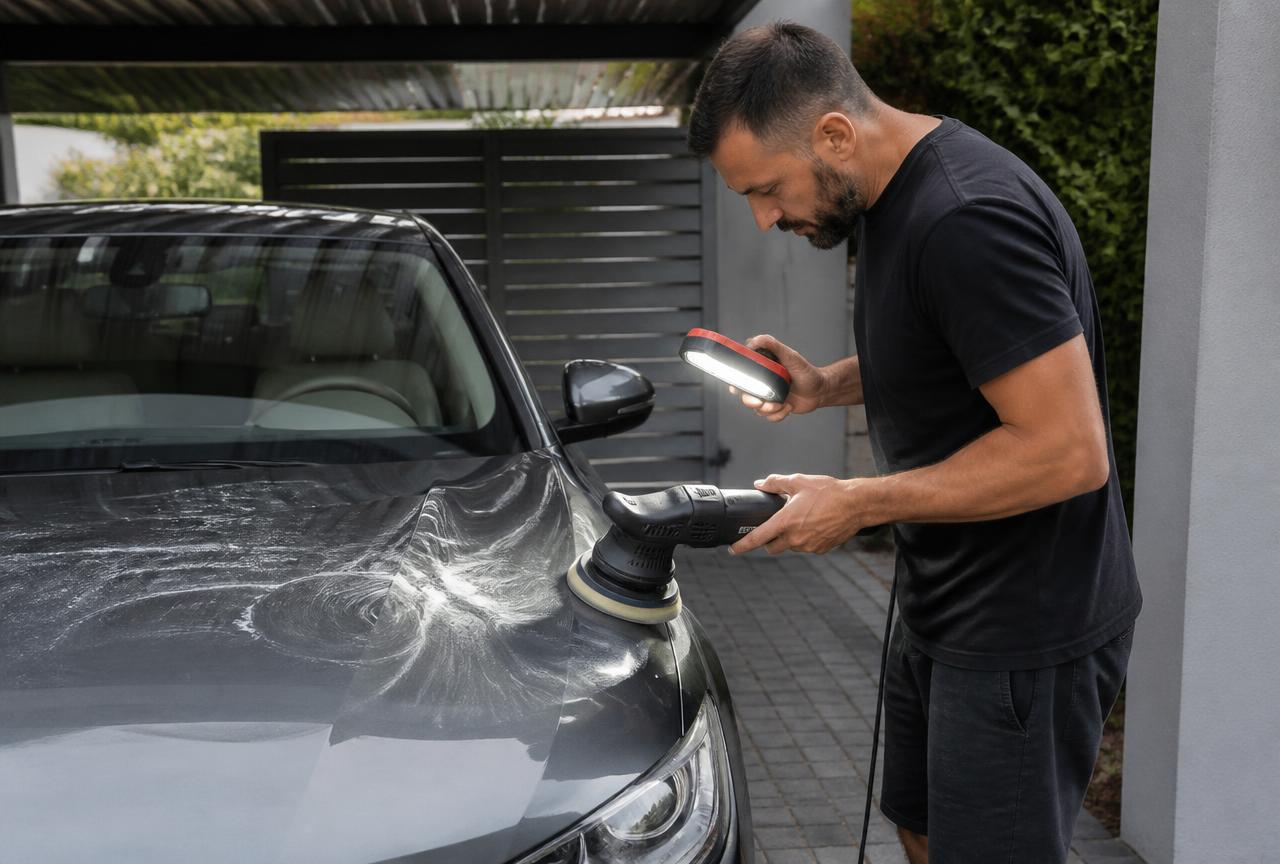
What correction actually does
Swirls, scratches, etching, and oxidation are not on the paint — they are in it. A scratch is a valley cut into the clear coat. Machine polishing removes a microscopic layer of the surrounding clear coat until the surface is level with the bottom of the defect, at which point the defect no longer catches light and disappears.
This is why correction cannot be repeated indefinitely. Factory clear coat is thin, measured in microns, and every correction consumes some of it. Responsible correction removes the least material that achieves a meaningful improvement.
Defects common on Tucson vehicles
Wash-induced swirl marks from brush tunnels and dry wiping are the most widespread, and Tucson's harsh direct sunlight makes them far more visible than they would be under overcast skies. Second is water spot etching from hard water and sprinkler overspray. Third is oxidation — UV degradation of the clear coat that shows as chalkiness or a flat, lifeless finish, particularly on red and dark colors and on horizontal panels that face the sun all day.
Bird dropping etch and bug etch appear more frequently here as well, because heat accelerates the reaction.
Correction versus enhancement
A single-stage enhancement polish is a lighter approach: it removes a modest portion of defects and substantially improves gloss and clarity, with minimal clear coat consumed. For many daily-driven vehicles this is the sensible choice — most of the visual gain for a fraction of the time and material removal.
Multi-stage correction uses a cutting step to remove deeper defects, then refines the finish. It achieves much more, takes far longer, and consumes more clear coat. It suits vehicles that are being kept long-term, being sold at a premium, or being prepared for a ceramic coating.
How the work is scoped
Nothing is promised before the paint is clean. The vehicle is washed and decontaminated, then inspected under focused lighting to see what is actually there. A test section is polished to confirm how the specific paint responds — hardness varies dramatically between manufacturers and even between panels on repainted vehicles.
Only then can a realistic plan be given: what will be removed, what will be improved, and what is staying.
Honest limitations
If a scratch catches a fingernail, it likely extends through the clear coat, and polishing cannot fill it. Paint that has already failed — clear coat peeling, flaking, or delaminating — cannot be polished back; that is a repaint. Panels with very thin clear coat from previous heavy polishing or aggressive buffing must be treated conservatively or left alone.
Nobody can guarantee every defect will be removed, and any detailer who does is not measuring anything.
Protecting corrected paint
Corrected paint is bare and, in this climate, immediately vulnerable. Applying protection right after correction is standard practice — most often a durable sealant or a ceramic coating, since the freshly corrected surface is the ideal substrate for a coating to bond to.
Just as important is changing what caused the defects. Correction followed by a return to brush tunnel washes puts the swirls back within a season.
Frequently asked questions
Ready to book mobile detailing in Tucson?
Call for availability or send vehicle details and we'll return a quote for the work your vehicle actually needs.