Service
Ceramic Coating in Tucson, AZ
A ceramic coating is a semi-permanent protective layer that bonds to the clear coat. In a UV-heavy, dust-heavy climate it is the most durable protection available — provided the paint underneath is prepared properly and the vehicle is maintained afterward.
Mobile service • We come to you • Tucson & surrounding areas
What a coating actually is
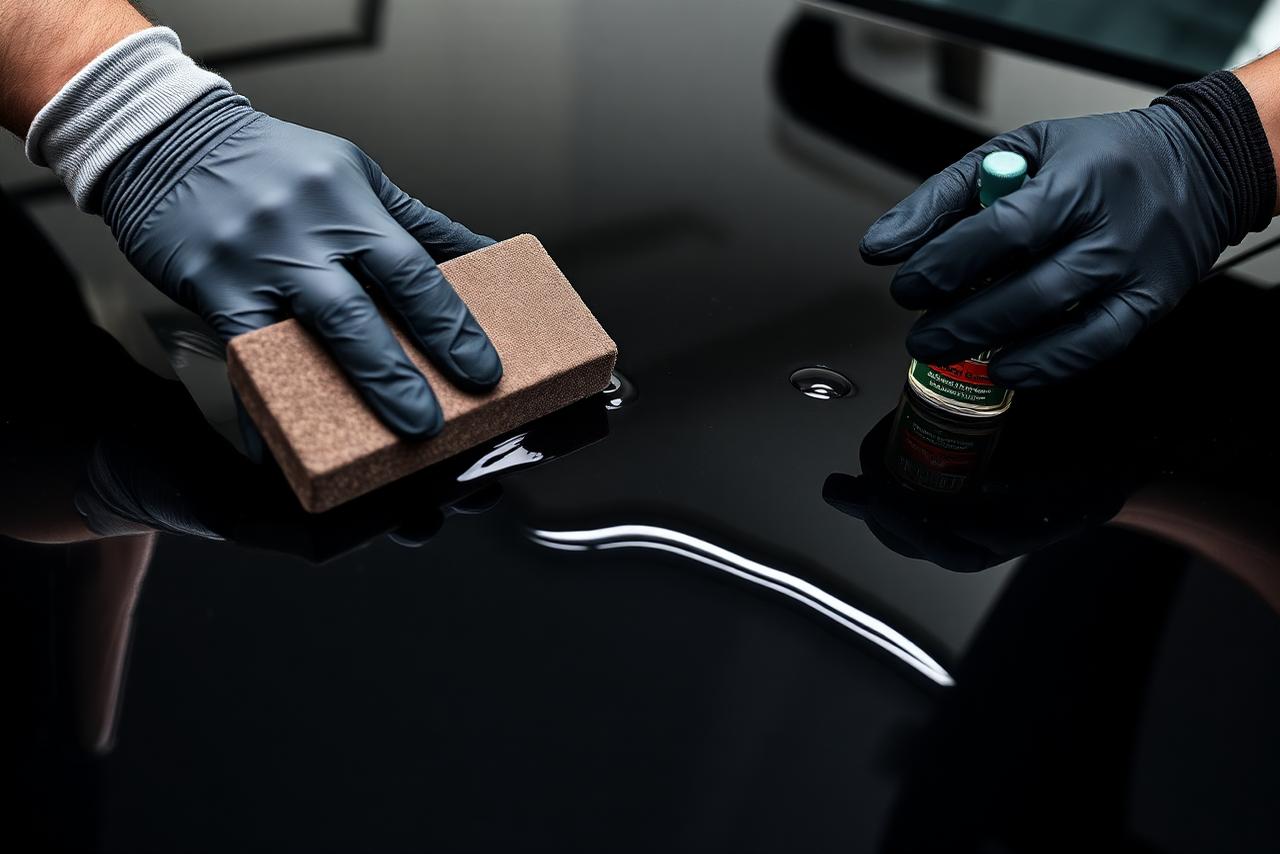
A ceramic coating is a liquid polymer, typically silica-based, that cures into a hard, thin, transparent layer chemically bonded to the paint. Unlike wax, it does not simply sit on top and wash away over weeks. It becomes the surface the world touches.
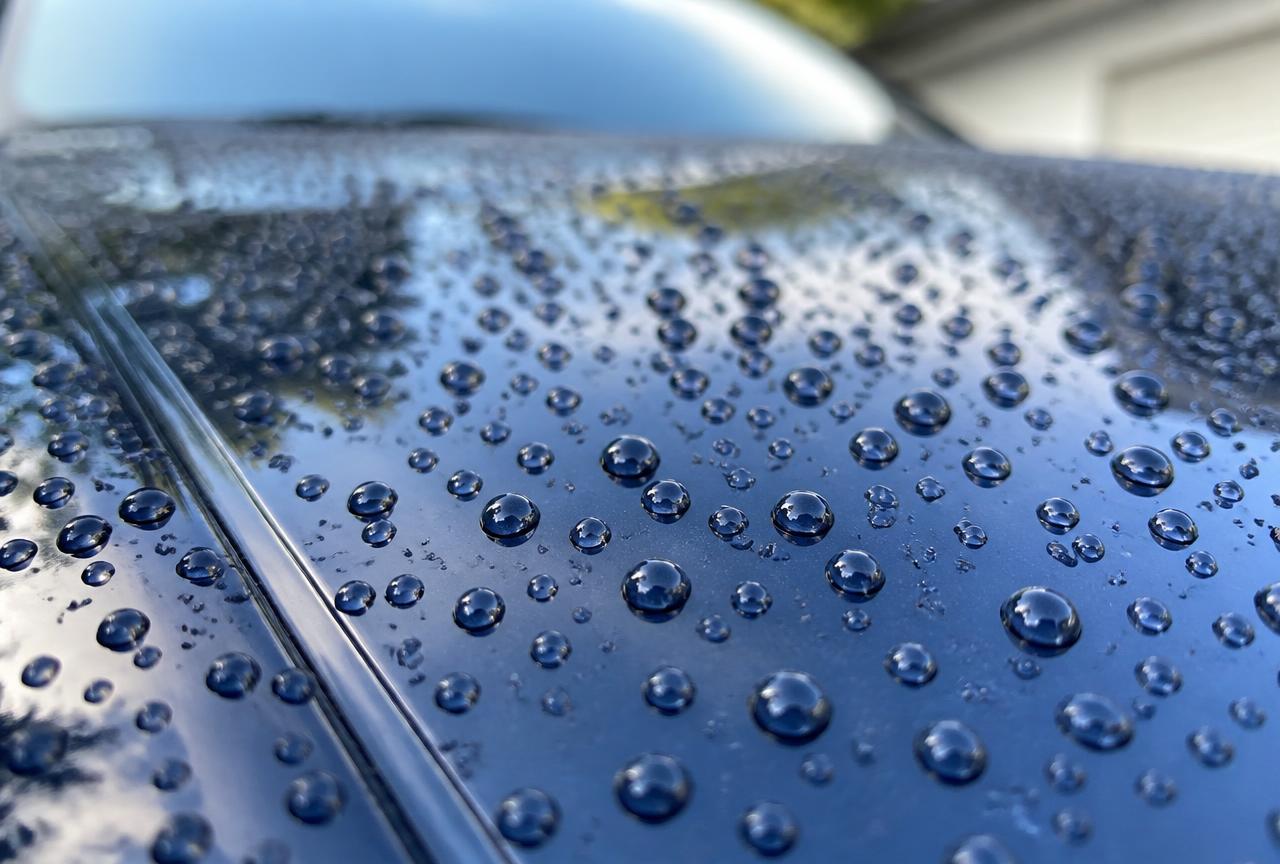
That layer is slick and hydrophobic, which changes how contamination behaves: dust releases more easily, water sheets off rather than clinging, and organic material has a harder time bonding to the finish. It is protection and easier maintenance — not a force field, and not a repair.
Ceramic coating for Tucson vehicles
Southern Arizona is unusually hard on exterior finishes. Sun exposure is intense and near-constant, surface temperatures on a parked panel climb far above air temperature, and clear coat degrades faster under that load than it does in milder climates. On top of that, the air carries fine mineral dust that settles on every horizontal surface within days of a wash.
The water is the second problem. Hard water from hoses and sprinkler overspray dries into mineral deposits, and monsoon rain arrives loaded with airborne dust rather than washing it away. Add bird droppings, bug residue and sap under parking-lot trees, and most Tucson vehicles end up washed more often than vehicles elsewhere — which is itself a source of wash-induced swirls.
A coating does not remove any of those hazards. What it changes is adhesion and effort: contamination bonds less aggressively to a cured coating than to bare clear coat, so routine washing takes less contact, less chemical aggression and less time. Over years of frequent washing in a dusty environment, that difference is the point.
Is your vehicle a good candidate?
Coating makes the most sense when there is a finish worth preserving and enough remaining ownership time to benefit from it. New vehicles, daily drivers that live outdoors, luxury and performance cars, trucks and SUVs, Teslas and other EVs, and freshly corrected paint are all straightforward candidates — as is any enthusiast-owned vehicle the owner already washes carefully.
It is a poor first purchase when the paint needs repair rather than protection. Heavy oxidation, failing or delaminating clear coat, deep scratches through the clear, and body damage all need to be addressed first, because a coating locks in the condition beneath it. In those cases we say so and recommend the correction or restoration work that actually changes the outcome.
Neglected or dull paint
Chalky, flat finishes usually need oxidation removal before any protection is worth applying.
Learn moreSwirls and wash marring
Fine circular scratches show badly under Tucson sun and are corrected, not covered, by a coating.
Learn moreIsolated scratches
Shallow scratches can often be levelled during preparation; deeper ones need honest assessment first.
Learn moreEtched water spots
Mineral etching should be removed before coating, otherwise it is sealed in place.
Learn morePreparation is most of the job
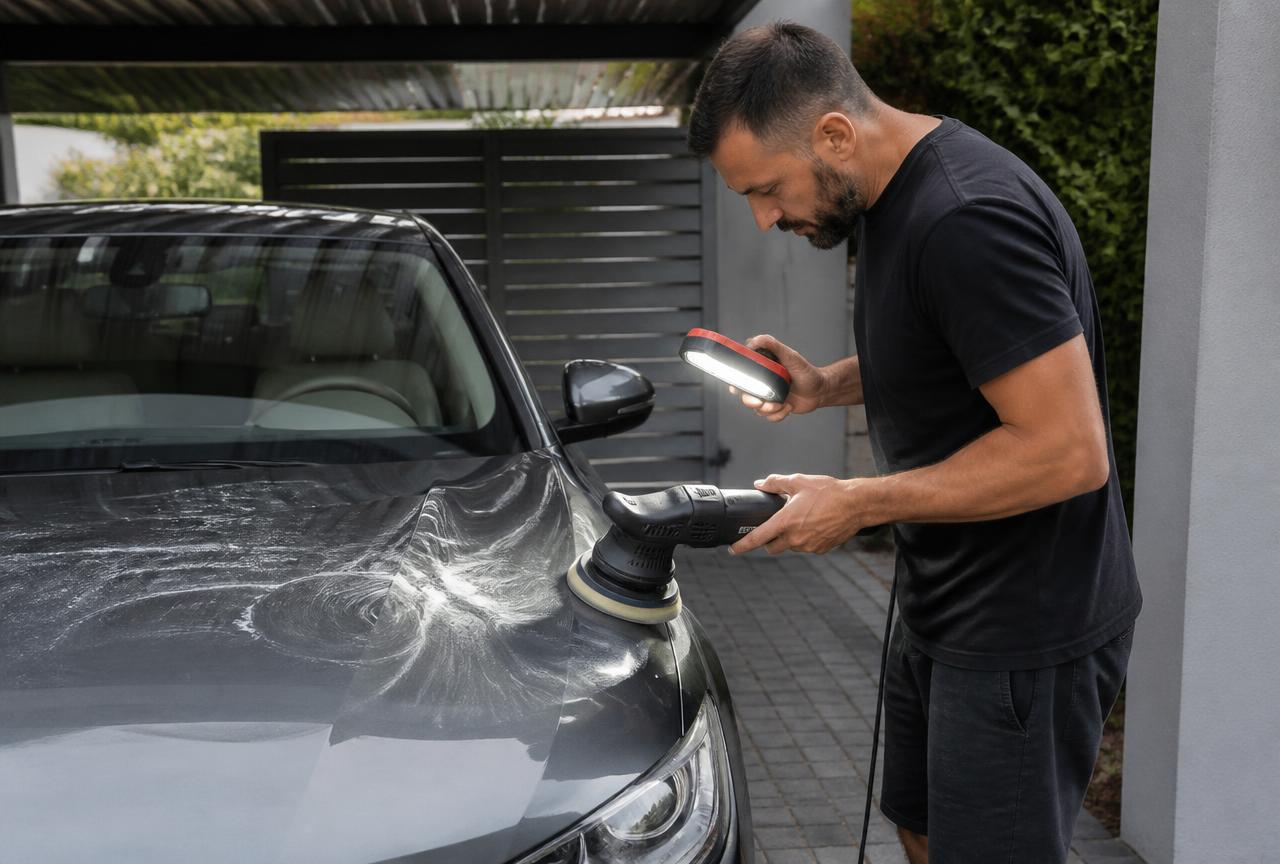
A coating locks in the state of the paint it bonds to. Contamination underneath stays there permanently. Swirl marks stay visible under a glossy layer. This is why coating work is mostly preparation: wash, chemical and mechanical decontamination, then correction or at minimum an enhancement polish, then a panel wipe to strip polishing oils so the coating bonds to bare clear coat.
A coating installed over a quick wash is money spent on preserving a flawed finish.
Our ceramic coating process
The sequence below is standard, careful coating work. Each step exists because skipping it shows up later in the finish.
- 1Vehicle and paint inspectionPaint is assessed in good light for defects, previous repairs, oxidation and clear coat health. This determines how much preparation the vehicle realistically needs.
- 2Thorough exterior washWheels, tires and wells first, then a safe hand wash of paint, glass and trim so no loose grit remains to be dragged across the surface.
- 3Chemical decontaminationIron and mineral deposits are dissolved rather than abraded away, which removes embedded contamination the wash cannot touch.
- 4Mechanical decontaminationWhere the paint still feels rough, clay work removes bonded particles so polishing and coating happen on a genuinely clean surface.
- 5Paint evaluationWith the surface clean, defects are visible for what they are, and the correction plan is agreed before any machine work starts.
- 6Correction or enhancement polishingPolishing levels defects so the coating locks in an improved finish rather than a flawed one. The extent varies by vehicle — not every car needs a multi-stage correction.
- 7Panel preparationA dedicated panel wipe removes polishing oils. Without it, the coating bonds to residue instead of clear coat and durability suffers.
- 8Coating applicationApplied panel by panel in controlled conditions, levelled at the right moment, and inspected under light for high spots before moving on.
- 9Initial curing periodThe coating needs undisturbed time to cure. The vehicle is left in suitable conditions and specific timing guidance is given for the system used.
- 10Final inspection and aftercareA last pass under light, then clear instructions on washing, drying and what to avoid over the first weeks.
Do you need paint correction before ceramic coating?
Paint correction and ceramic coating are two different services. Correction improves the finish by levelling defects — swirls, marring, light scratches, oxidation, water spot etching. Coating protects whatever finish exists when it is applied. One changes how the paint looks; the other preserves it.
How much correction a vehicle needs varies widely. A new or carefully maintained car may need only a light enhancement polish to remove minor marring and maximise gloss. A vehicle with years of brush-wash swirls, sun-flattened paint or heavy mineral etching needs considerably more work before a coating is worth installing.
We do not treat a large correction package as mandatory for everyone. The paint gets inspected, the realistic options get explained, and you decide how far to take it.
Ceramic coating cost in Tucson
Coating is quoted per vehicle because the work is dominated by preparation, and preparation varies enormously. Two identical models can require very different amounts of time: one garaged and hand-washed, the other parked outdoors for five years under a mesquite tree with sprinkler overspray on one side.
What determines your quote: vehicle size and panel count; current paint condition; how much bonded contamination has to be removed; how much polishing or correction you want done; the coating system chosen; how many surfaces are included beyond paint, such as wheels, glass and trim; access and working space at your location; and the total preparation time the vehicle honestly needs.
We do not publish flat prices for this service, because a number quoted before anyone has looked at the paint is a guess. Send vehicle details or a few photos and we will give you an accurate quote for the work in front of us.
How long does ceramic coating last?
Advertised coating longevity assumes correct installation and consistent maintenance. Real-world durability on a Tucson vehicle depends on the coating system and how many layers it supports, whether the car is garaged or parked outdoors, annual mileage, wash technique, exposure to hard water and sprinklers, and how promptly contamination gets removed.
An outdoor-parked daily driver washed in a brush tunnel will not match a garaged weekend car washed by hand — same coating, very different outcome. Rather than quoting a headline number, we discuss what is realistic for your vehicle and how it is used, and what periodic maintenance keeps the surface performing.
Ceramic coating vs wax vs paint sealant
All three protect paint; they differ in durability, preparation and commitment. Wax is the least durable and the easiest to apply or reapply, with a warm look many owners like. A synthetic sealant is more chemically stable, tolerates Arizona heat and UV considerably better than wax, and asks for less preparation than a coating. A ceramic coating is the most durable of the three, gives the strongest hydrophobic behaviour, and demands the most preparation because it is bonded rather than temporary.
Wax and sealants are not obsolete. They make sense on vehicles you may not keep long, on paint that does not justify correction, or when you prefer a low-commitment option refreshed a few times a year. Coating makes sense when you want the surface to stay easy to maintain for years and are willing to wash it properly.
Car wax
Shortest-lived, simplest to apply, minimal preparation, easily refreshed. Best for owners who enjoy regular hands-on care.
Learn morePaint sealant
Synthetic and more heat- and UV-stable than wax, moderate preparation, a practical middle ground for Tucson daily drivers.
Learn moreCeramic coating
Most durable and most hydrophobic, bonded to the clear coat, requires full preparation and a disciplined wash routine.
Learn moreWhat a ceramic coating will not do
It does not make paint scratch-proof. It adds hardness at a microscopic scale, but rock chips, deep scratches, key damage, collision damage, brush-tunnel swirls and severe abrasion all still damage a coated vehicle. It does not grant permanent immunity from water spots — minerals still deposit when hard water dries on the surface, they are simply easier to remove before they etch. It does not stop existing paint failure such as delaminating clear coat, and it does not repair anything: whatever the paint looks like at install is what it will look like under the coating.
A ceramic coating is also not paint protection film. PPF is a physical urethane film applied for impact protection against rock chips; a coating is a chemical layer measured in microns. They solve different problems, and a coating should not be sold as chip protection.
- Rock chips and road debris impact
- Deep scratches through the clear coat
- Key damage and parking lot contact
- Collision or body damage
- Automatic brush wash damage
- Permanent immunity from water spotting
- Existing clear coat failure
- Any need to stop washing the vehicle
Mobile ceramic coating in Tucson
Coating can be installed at your home or workplace when the conditions allow it, which is how most of our coating work is scheduled. What matters is the environment during preparation and application: a shaded or enclosed working area, enough room to move around the whole vehicle, surface temperatures within a workable range, no active sprinklers nearby, and reasonably controlled dust while panels are being wiped and coated.
Not every driveway or parking space qualifies. A dusty gravel lot in wind, a spot in full afternoon sun, or a stall too tight to reach lower panels will compromise the result, and we would rather say so than install a coating badly. A garage or covered carport is ideal; many shaded driveways work fine.
Suitability is confirmed when the appointment is scheduled — we ask about the space, shade, water access and timing up front, and the job is booked for a window that allows the full preparation and cure sequence rather than a rushed afternoon.
After your ceramic coating is installed
Cure times differ between coating systems, so you will get specific guidance for the product used rather than a generic rule. In general, the surface should be left undisturbed during the initial cure, unnecessary water exposure avoided in that window, and the vehicle kept out of sprinkler range.
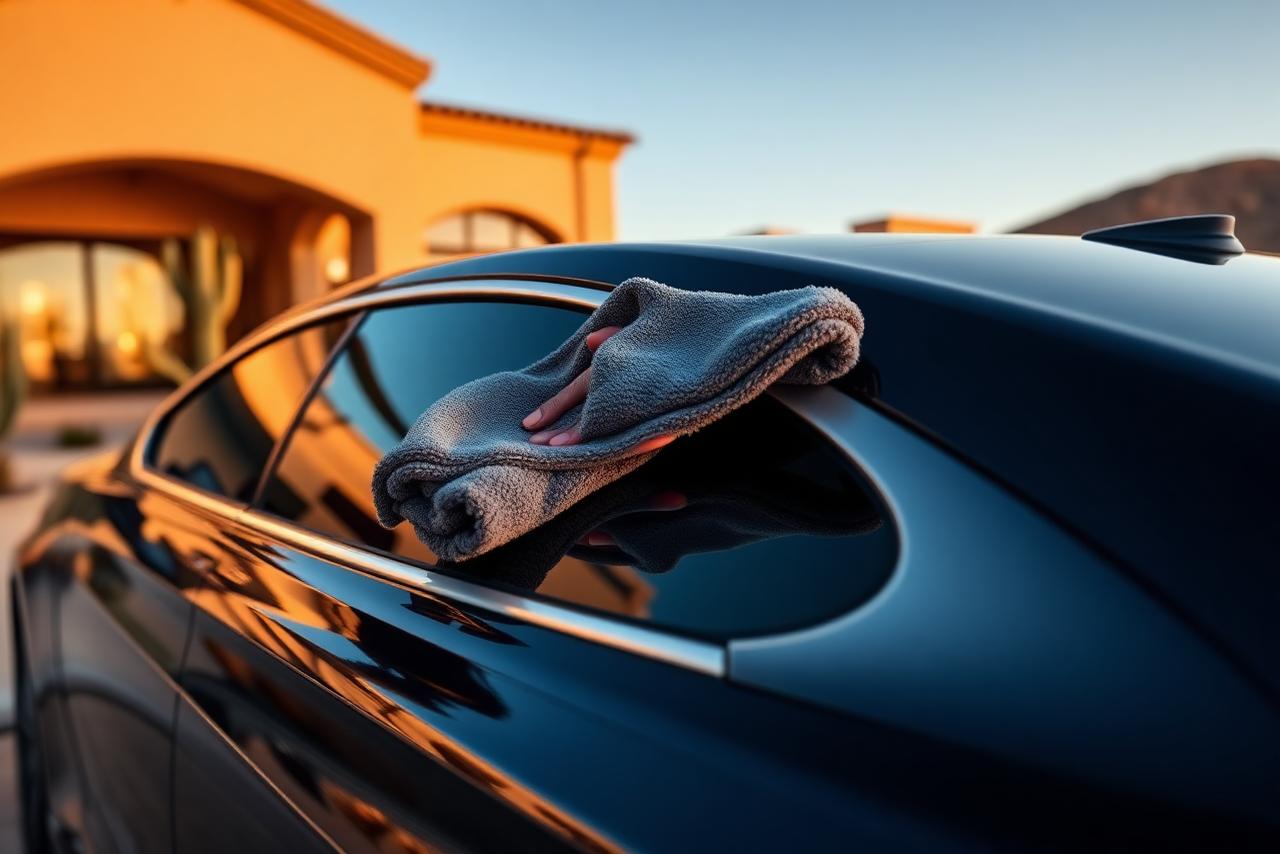
After that, maintenance is straightforward and matters more than owners expect. Wash by hand with a pH-appropriate automotive soap, use clean media and plenty of lubrication, and skip brush tunnels entirely — they are the fastest way to mar a coated finish. Dry thoroughly so Tucson's hard water does not leave minerals sitting on the surface, and remove bird droppings, bug residue and sap promptly rather than letting them bake on.
Periodic decontamination and a maintenance detail keep the water behaviour lively and catch contamination before it becomes etching. Coated vehicles do not need less attention; they need the right attention, and less of it.
Coating more than paint
Paint is the usual priority, but several other surfaces benefit when a compatible product is used for the material.
Not every ceramic product suits every surface — wheel, glass and trim coatings are formulated differently from paint coatings, and matte finishes, uncoated plastics and some textured trim need specific products or should be left alone. We confirm what makes sense for the vehicle rather than coating everything by default.
Wheels
Brake dust and road film release far more easily from a coated wheel face, which shortens cleaning and reduces scrubbing on finishes that scratch easily.
Exterior glass
Coated glass sheds water, improves wet-weather visibility, and resists mineral spotting — useful given how badly Tucson glass spots from sprinklers and hard water.
Exterior trim
Compatible trim coatings help protect plastic against sun fade and make dust and wash residue easier to remove from textured surfaces.
Ceramic coating for different vehicles
The process is the same; the time, panel count and preparation differ. Larger vehicles take longer, softer paint systems need a more careful correction approach, and vehicles that live outdoors typically arrive with more contamination to remove.
Frequently asked questions
What does ceramic coating do?
Is ceramic coating worth it in Tucson?
How much does ceramic coating cost in Tucson?
How long does ceramic coating last in Arizona?
Does ceramic coating protect against the Arizona sun?
Does ceramic coating prevent water spots?
Does ceramic coating prevent scratches?
Do I need paint correction before ceramic coating?
Can a new car be ceramic coated?
Can you apply ceramic coating at my home?
How long does ceramic coating take?
When can I wash my car after ceramic coating?
Can ceramic coating be applied to wheels?
Can ceramic coating be applied to glass?
Is ceramic coating better than wax?
Does ceramic coating make a car maintenance-free?
Ready to book mobile detailing in Tucson?
Call for availability or send vehicle details and we'll return a quote for the work your vehicle actually needs.