Service
Exterior Detailing in Tucson
Exterior detailing is a sequence, not a single task: clean the surface, remove what the wash cannot, then protect what is underneath. In Tucson that middle step carries more weight than it does almost anywhere else.
Mobile service • We come to you • Tucson & surrounding areas
What exterior detailing covers
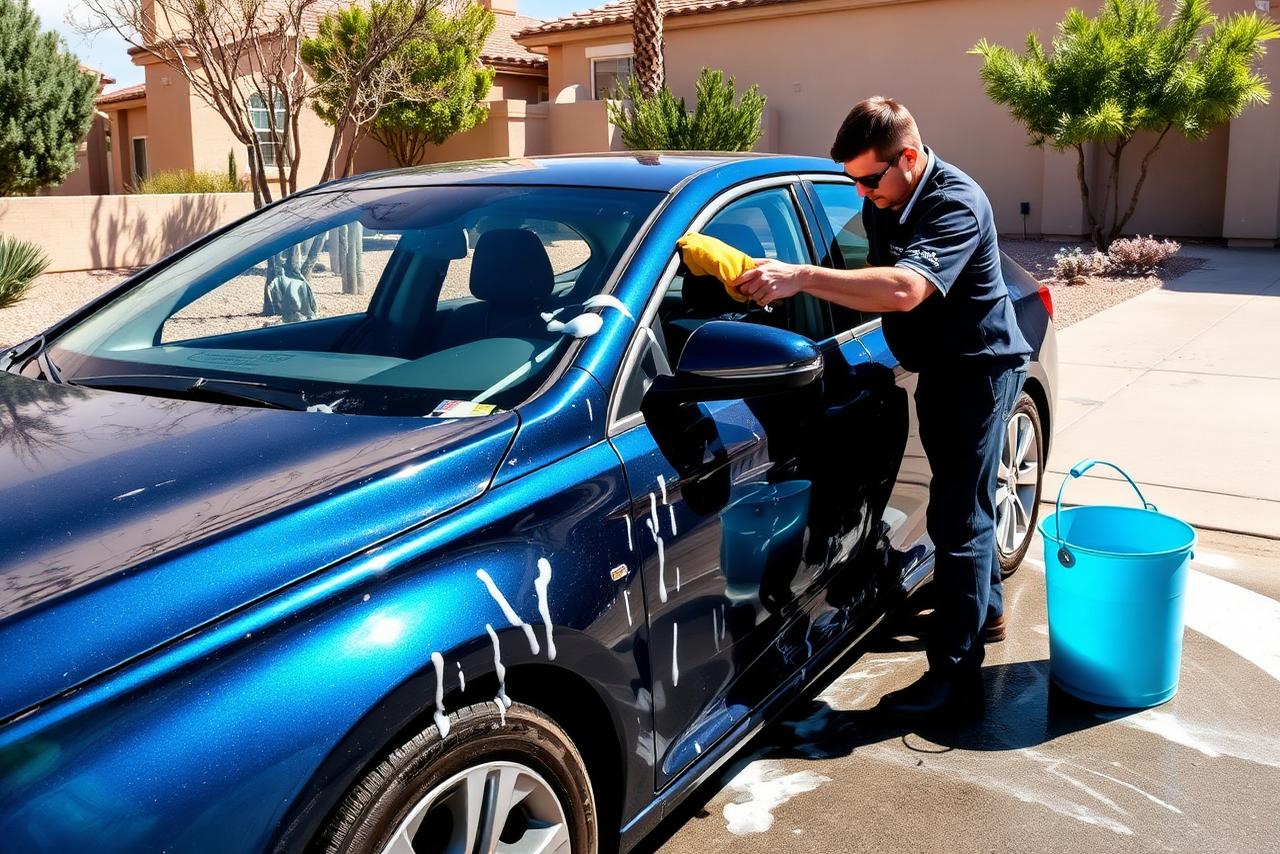
Wheels, tires, and wheel wells first, since brake dust and road film are the heaviest contamination on the vehicle. Then a safe hand wash of all painted surfaces, exterior glass, door jambs, and exterior trim. Once the surface is clean, the paint is evaluated by touch for bonded contamination and by eye for defects.
The service concludes with protection. An exterior detail that ends with bare, unprotected clear coat in this climate is unfinished work.
Desert dust and why washing technique matters
The dust that settles on Tucson vehicles is fine and mineral-based, and mineral grit is harder than clear coat. Any wash method that moves that grit across the paint under pressure — a brush tunnel, a dry towel wipe-down, a single dirty bucket — leaves fine scratches. Enough of them, and paint reads hazy under direct sun even though it is technically clean.
The remedy is procedural: rinse before contact, keep grit out of the wash media, use plenty of lubrication, and dry with clean, soft material. It is unglamorous, and it is the difference between paint that holds up and paint that dulls over a few seasons.
Decontamination: the step most washes skip
Run a hand over a washed panel. If it feels like fine sandpaper rather than glass, contamination is bonded to the surface. In this area the usual culprits are mineral deposits from hard water and sprinkler overspray, embedded road grit, industrial fallout near the interstate corridors, and baked-on bug and organic residue from monsoon-season driving.
Chemical decontamination dissolves mineral and iron-based contamination. Mechanical decontamination with a clay medium shears off what remains. Both are done before any polishing or protection, because sealing contamination under a coating locks it in place.
Water spots, bugs, and bird droppings on hot paint
Tucson's specific hazard is that everything happening to paint happens on a hot surface. Water that lands on a panel at midday evaporates quickly and concentrates dissolved minerals into a ring. Bird droppings and bug residue are acidic and organic, and heat accelerates the chemistry — what would be a two-day problem in a mild climate can begin etching in an afternoon here.
The practical advice is unglamorous: remove organic contamination as soon as you notice it, and keep protection on the paint so the contact happens on a sacrificial layer rather than on the clear coat.
When the finish needs more than cleaning
A clean, decontaminated finish that still looks flat, hazy, or spider-webbed has defects in the clear coat itself. Those require machine polishing — removing a controlled amount of clear coat to level the surface. That is a separate service with its own considerations and limits.
Choosing protection for an Arizona vehicle
Carnauba wax looks warm and rich and does not last long under sustained heat and UV. A synthetic sealant trades some of that warmth for meaningfully longer durability, which is why it is a common choice locally. A ceramic coating is the longest-lasting option and requires the most preparation and the most disciplined maintenance.
The right answer depends on how the vehicle is stored, how often it is washed, and how long you plan to keep it. There is no universally correct product.
Frequently asked questions
Ready to book mobile detailing in Tucson?
Call for availability or send vehicle details and we'll return a quote for the work your vehicle actually needs.